
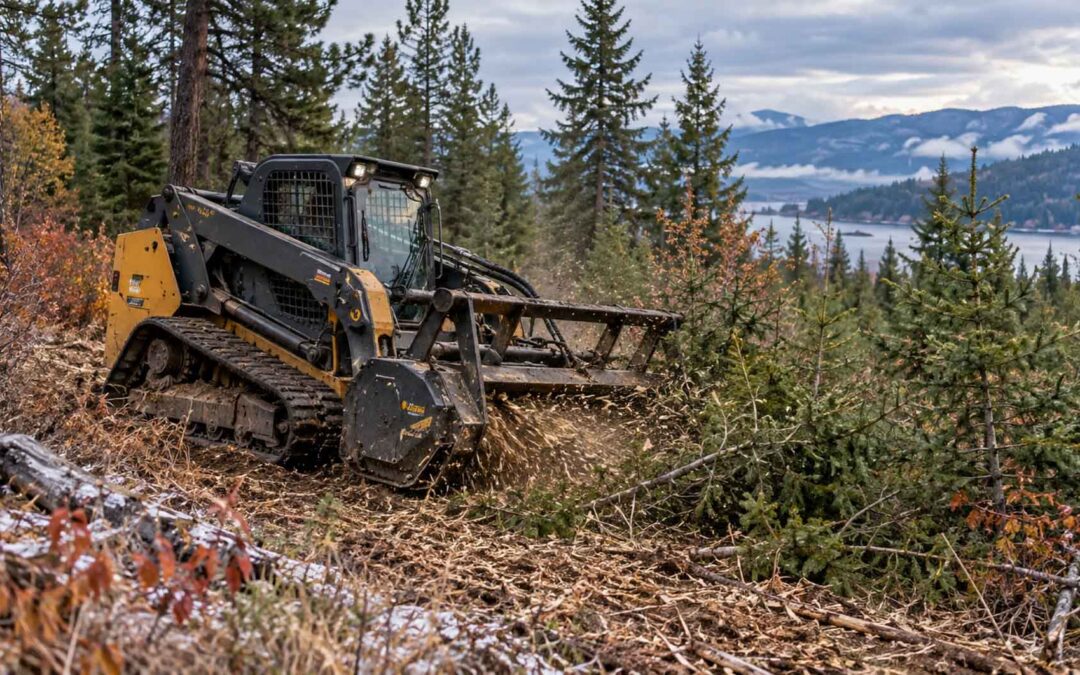
The best time of year for forestry mulching in the Pacific Northwest is when the ground can support equipment, the property is safely accessible and applicable fire restrictions allow the work. Fall and winter can offer useful opportunities, but wet soils, snow, ice and changing conditions can make another season the better choice.
For rural property owners, the question is often practical: should you clear overgrown acreage before winter, wait for firmer ground or plan the work ahead of spring improvements? The answer depends on what is growing, where equipment needs to travel and how you want to use the land afterward.
Axsus Land Management provides forestry mulching services for rural acreage, wooded properties, access improvements and vegetation management across Washington, Idaho, Montana and Oregon. This guide explains what to consider when planning a fall or winter project.
Is Fall a Good Time for Forestry Mulching?
Fall can be a practical time to assess overgrown areas and plan work before winter access becomes more difficult. It also gives landowners an opportunity to coordinate vegetation treatment with next year’s fencing, trails, pasture maintenance or other property improvements.
Where deciduous brush loses its leaves, it may be easier to see what should be removed and what should remain. That benefit varies by vegetation type; evergreen cover does not disappear just because the season changes.
However, early fall should not automatically be treated as a low-risk operating window. Dry vegetation and restrictions may still affect a project, while later rain can change ground conditions. Schedule around the property’s actual condition rather than assuming September, October or November will always be suitable.
Can Forestry Mulching Be Done in Winter?
Yes, forestry mulching can be considered in winter when equipment access, visibility and ground conditions are suitable. Firmly frozen soil may support equipment better than soft ground, but a frosty morning is not enough to establish that a site is ready.
Snow cover also does not prove the ground underneath is frozen. The University of Minnesota Extension explains how snow insulates forest soils, affecting frost development.
Before scheduling, discuss snow-covered obstacles, icy access and possible thawing with the contractor. A winter project should remain conditional on a safe operating window.
Forestry Mulching by Season
Use this comparison as a planning guide, not a fixed work calendar. Conditions can differ between properties in the same community.
| Season | When It May Fit | What May Delay Work |
|---|---|---|
| Fall | Planning and treating accessible acreage before winter or next year’s improvements. | Remaining fire restrictions, dry vegetation or rain-softened ground. |
| Winter | Sites with suitable ground support and safe equipment access. | Snow-covered obstacles, ice, shallow frost or thawing conditions. |
| Spring | Projects ready to proceed once the site and access routes can support equipment. | Soft ground, standing water or snowmelt affecting the work area. |
| Summer | Sites with suitable access and ground conditions when operating restrictions permit. | Fire danger, equipment-use restrictions and unsuitable weather. |
Ground Conditions Matter More Than the Month
Forestry mulching is not a no-impact process. Equipment can compact soil or create ruts, particularly when ground conditions are unsuitable. A firm driveway also does not tell you whether the wooded area beyond it can support the same equipment.
Oregon State University Extension’s guidance on mechanical fuel treatments recommends operating on dry soils and matching equipment to the vegetation to help limit compaction.
Review the entire route into the work area, including staging space, slopes, low spots and drainage features. Where ground protection is a concern, postponing part of the work or choosing another treatment method may be more appropriate than forcing equipment onto the site.
Planning Forestry Mulching Across the Inland Northwest
A regional forecast is only a starting point. The useful question is whether the specific property, access route and treatment area are ready for the proposed work.
Eastern Washington and the Spokane Area
For projects around Spokane, Cheney, Deer Park, Colville and Newport, identify whether the goal is brush reduction, wooded-acreage maintenance, improved access or preparation for another land improvement. A treatment plan for open acreage may differ from one involving retained trees and narrow access routes. Learn more about our forestry mulching in Spokane.
North Idaho
For wooded properties around Coeur d’Alene and Sandpoint, discuss the condition of private roads, slopes and the actual work area before setting a date. Include any known seasonal access problems in the initial project information. Explore our forestry mulching services in Coeur d’Alene and Sandpoint.
Western Montana
For a proposed fall or winter project near Kalispell, confirm how equipment will reach the site and whether changing conditions could interrupt the work. A date on the calendar should not replace an assessment of access and ground support. Review our Kalispell forestry mulching services.
Eastern Oregon
For eastern Oregon acreage, start with the vegetation and intended use of the land. Not every brush or grass management project requires a forestry mulcher. Our Oregon land-management services are evaluated around the property, project scope and appropriate treatment method.
Check Fire Restrictions Before Scheduling Equipment Work
Moving into fall does not automatically end fire restrictions. Mechanical vegetation treatment also should not be assumed exempt simply because it does not involve an open burn.
Washington DNR publishes Industrial Fire Precaution Levels for applicable forest operations. Oregon provides separate information for public and industrial fire restrictions. Idaho landowners can review Idaho’s fire-restriction guidance, while Montana Fire Info provides Montana restriction resources.
The contractor should confirm the requirements that apply to the location and proposed operation. These resources address fire restrictions; they are not a substitute for checking any separate land-use, forestry or environmental approvals relevant to the project.
Match the Timing to What You Want the Property Ready For
Before deciding when to mulch, decide what the finished area needs to do. Opening a walking trail, managing brush beneath retained trees and preparing a building site are different objectives.
Forestry mulching can be appropriate for processing brush, saplings and selected woody material on site. It should not be confused with complete stump removal, grading or preparing a construction-ready building pad. Larger trees, unsuitable material or development work may require land clearing or additional site-preparation services.
For a spring project, work backward from the intended improvement. Identify which vegetation needs treatment, what material can remain and which additional steps are needed afterward. Our guide to forestry mulching versus traditional land clearing explains the differences between these approaches.
Plan for the Material Left Behind and Future Maintenance
Forestry mulching processes vegetation into smaller material that generally remains on the property. It does not make the woody material disappear. Oregon State University Extension discusses mastication as one of several alternatives for handling forestry slash.
For wildfire-related work, treatment should address how vegetation and debris are arranged, not simply how open the property looks. Mulched material remains combustible, and the appropriate finish depends on the site and treatment objectives. Our wildfire mitigation services consider vegetation, access and material handling together.
Fall or winter treatment is also not a permanent solution to regrowth. Plan to inspect the area during the following growing season and discuss follow-up maintenance. Any future seeding, pasture establishment or planting should be coordinated with the material left on the ground and the intended use of the site.
What to Prepare Before a Fall or Winter Site Evaluation
A few clear details help turn a general scheduling question into a useful project discussion:
- Property location and treatment area: provide the address or general location and an estimate of the acreage needing work.
- Your intended result: explain whether the priority is access, brush reduction, fuel management, pasture reclamation or another improvement.
- Photos and access information: include the entrance, work area, vegetation and any known seasonal access limitations.
- Features to protect: identify retained trees, fences, utilities, structures, property boundaries and sensitive areas.
- Timing and follow-up work: mention planned fencing, construction, planting or other work that needs to be coordinated.
Arrange the site evaluation before the preferred work window when possible. Planning early allows time to compare methods and identify constraints without committing to operating in unsuitable conditions. The best schedule is the one that fits the property, not simply the first available date.
Frequently Asked Questions About Fall and Winter Forestry Mulching
Is fall better than spring for forestry mulching?
Fall may be a better fit when the property is accessible and work can be completed under suitable ground and fire conditions. Spring may be preferable on another site. Compare the actual work area, access route, vegetation and project goals rather than choosing by season alone.
Can forestry mulching be done when there is snow on the ground?
Sometimes, but snow depth, visibility, traction and ground support must be evaluated. Snow can hide obstacles and does not prove the soil underneath is frozen. The contractor should assess whether the site can be treated safely and effectively before scheduling winter work.
Can forestry mulching be done on wet ground?
Wet or saturated ground may make mechanical treatment unsuitable because equipment can create ruts and compact soil. Suitability depends on the soil, terrain, equipment and access route. Waiting for better conditions or using a different treatment approach may be the better decision.
Is forestry mulching cheaper in winter?
Do not assume winter will be cheaper. Ask for a site-specific estimate based on vegetation, acreage, access, terrain and the desired finish. Any additional work needed to reach or operate on the property should be discussed before comparing seasonal scheduling options.
Will brush grow back after fall or winter forestry mulching?
It can. Forestry mulching treats aboveground vegetation, and some plants can resprout or establish from seed afterward. Clearing during a dormant period does not permanently prevent regrowth. Plan follow-up inspections and maintenance based on the vegetation and how the property will be used.
Can forestry mulching prepare my land for a spring project?
It can be one step in preparing overgrown land for access improvements, fencing, trails or other uses. Projects requiring stump removal, grading, utilities or a building pad may need additional services. Explain the intended spring project during the site evaluation so the work can be sequenced appropriately.
Plan Your Fall or Winter Forestry Mulching Project
Have overgrown acreage, brush along an access route or wooded property that needs attention? Axsus Land Management can evaluate the vegetation, terrain, ground conditions and intended use of your land to recommend an appropriate treatment approach and discuss timing.
We work with rural and forested properties across Washington, Idaho, Montana and Oregon. Project availability depends on location, scope, access and site conditions.