Professional Land Clearing in Coeur d’Alene, ID
Wooded Acreage, Homesite and Access Clearing in Kootenai County
Professional land clearing services help Coeur d’Alene and Kootenai County property owners prepare wooded acreage for homesites, access roads, utilities, outbuildings and long-term property improvements. North Idaho properties often contain dense brush, smaller trees, mature timber, uneven terrain and limited equipment access that require a carefully planned clearing approach.
Each property is evaluated according to vegetation density, tree size, terrain, soil conditions, access and the intended use of the land. The goal is to remove the material necessary for the project while avoiding unnecessary disturbance outside the planned work area.
Land Clearing Services in Coeur d’Alene
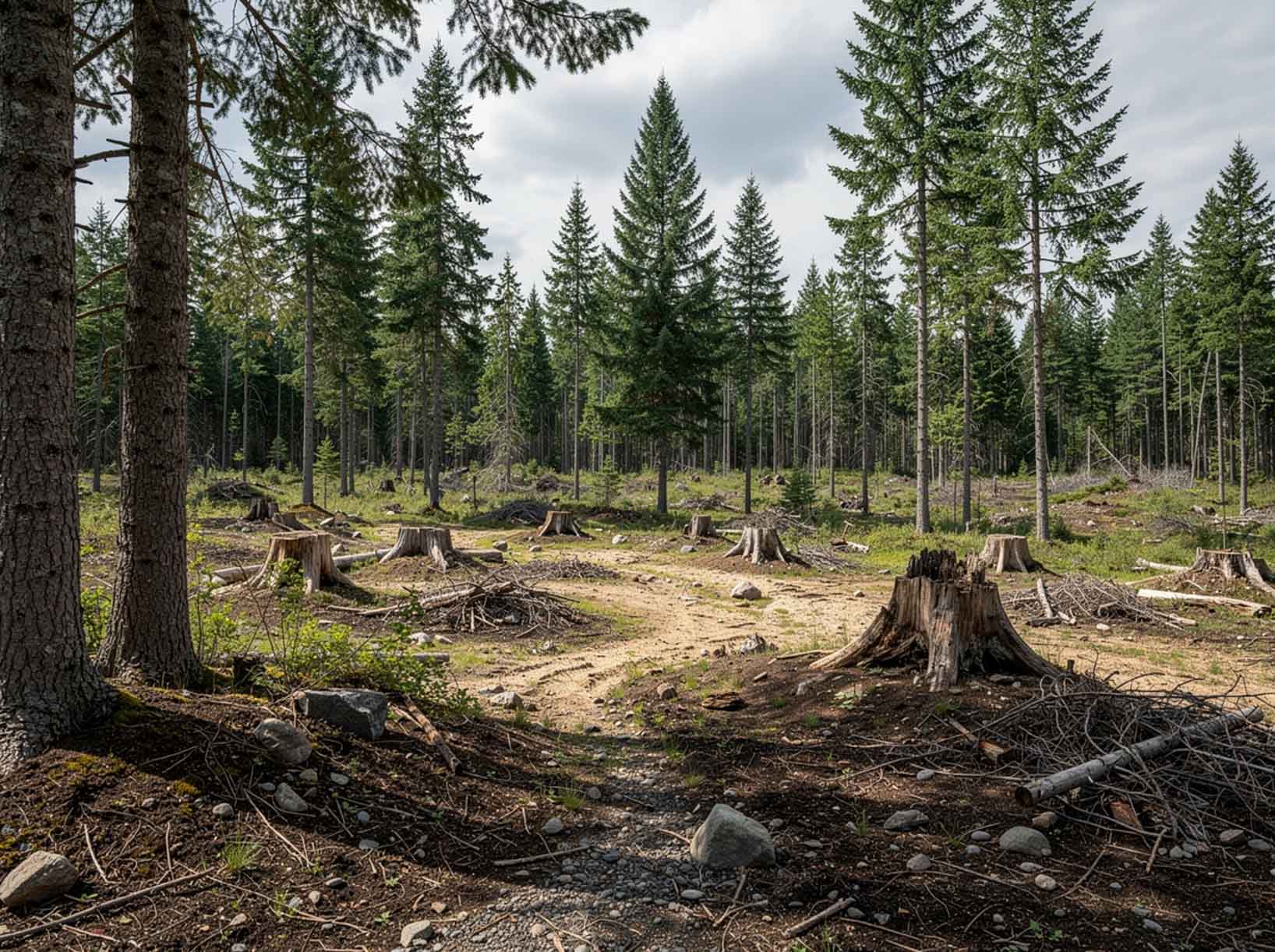
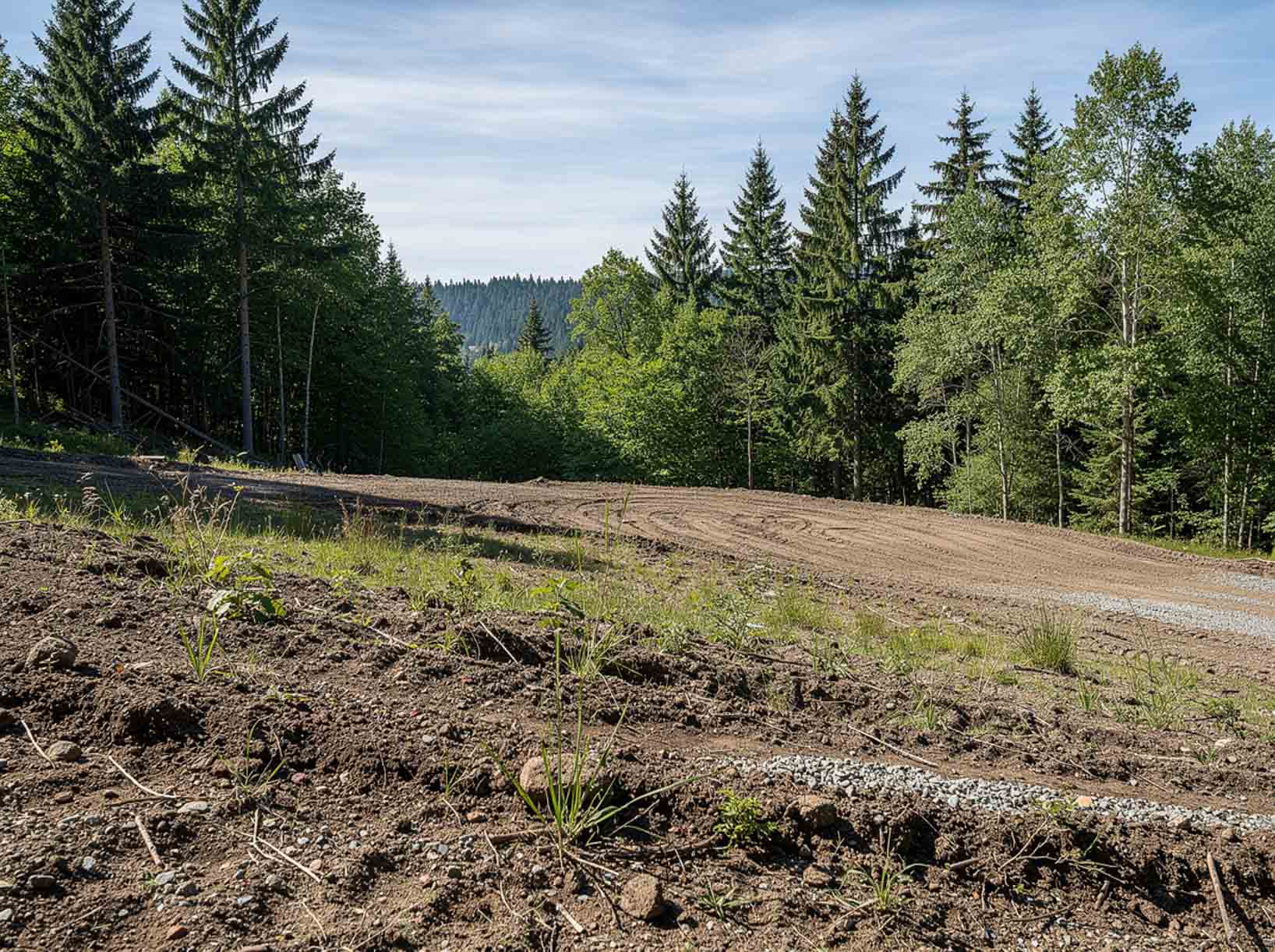
Land clearing removes trees, brush, stumps and other vegetation from selected areas of a property. The appropriate method depends on the size and density of the vegetation, terrain, equipment access and the condition required after clearing.
Land clearing may be completed for:
- New homesites and building areas
- Private roads and driveways
- Shops, barns and outbuildings
- Utility and septic access
- Fence lines and property boundaries
- Pasture or usable acreage expansion
- Drainage and excavation access
- Wildfire fuel reduction
Some properties require only selective brush and tree removal. Others require broader clearing before excavation, grading or construction can begin.
Homesite and Building-Site Clearing
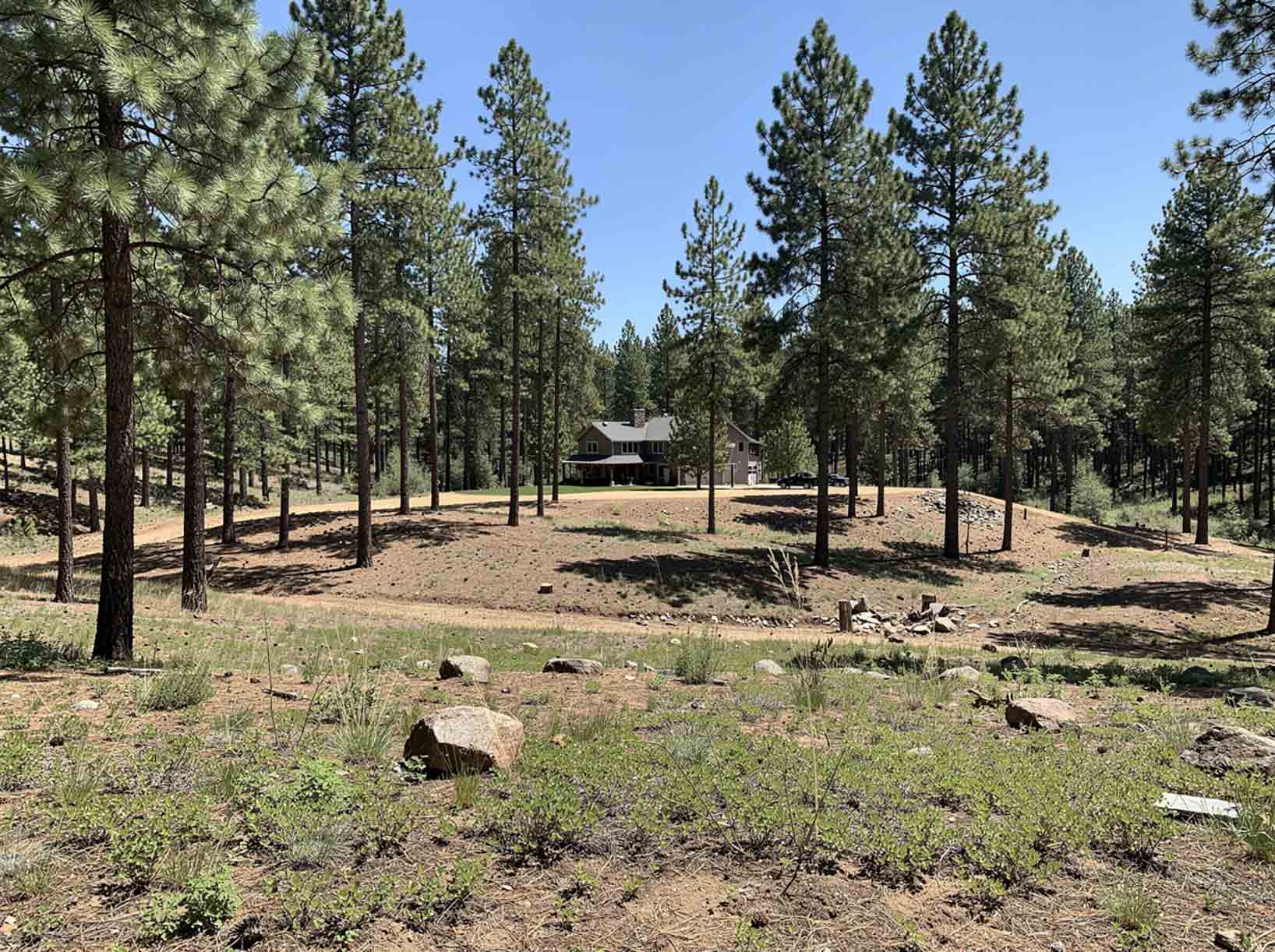
Preparing a homesite or building area involves more than removing visible vegetation. The clearing plan should account for structure placement, access, utilities, drainage, surrounding timber and the space needed for future excavation or construction.
Homesite clearing may include:
- Removing brush and smaller trees
- Removing larger timber within the building area
- Opening equipment access
- Clearing space for utilities and septic systems
- Creating room for grading and foundation work
- Managing logs, slash and woody debris
Once vegetation is removed, excavation and site preparation may be needed for grading, drainage, road construction or foundation preparation.
Clearing Wooded Acreage
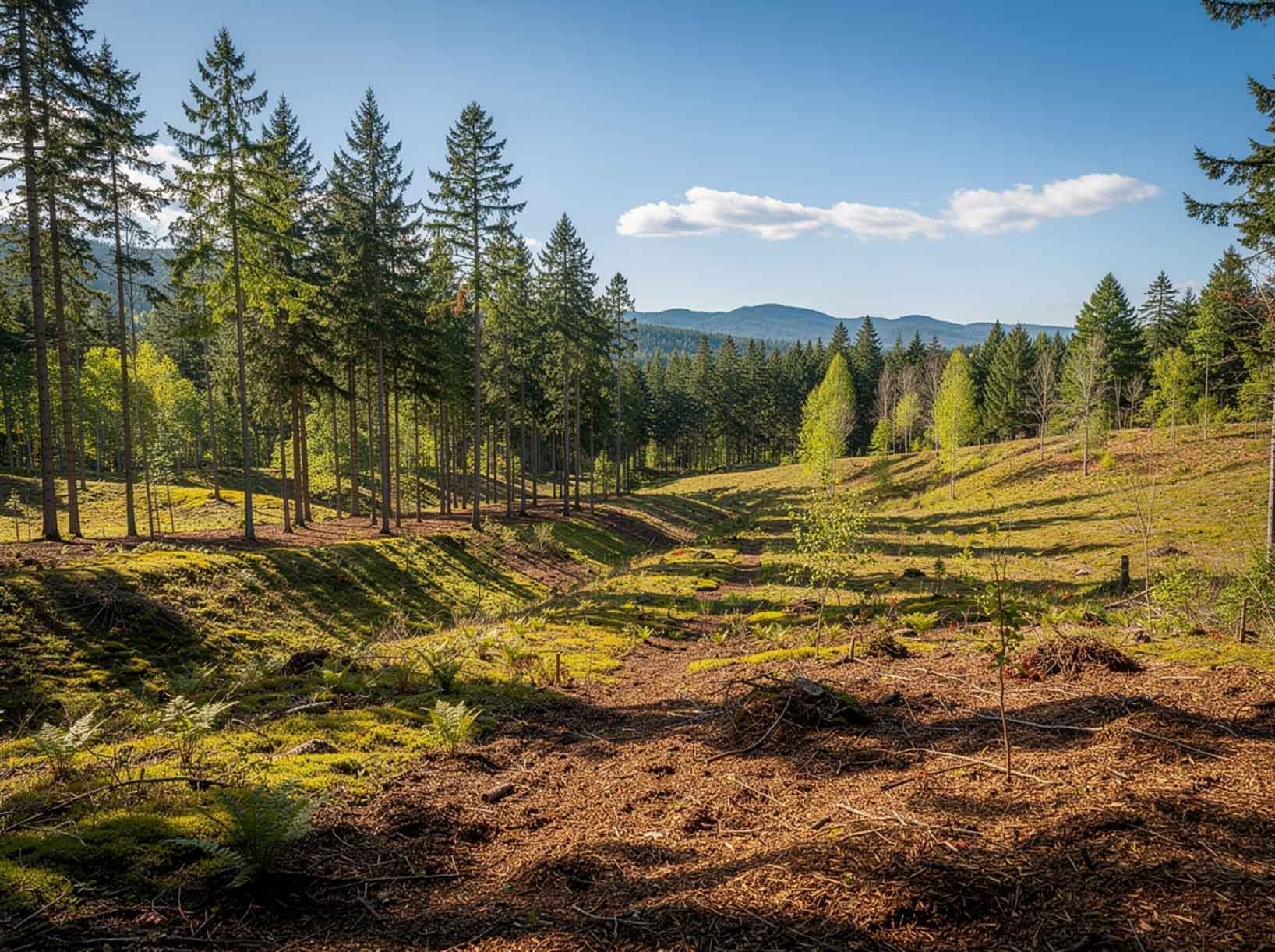
Wooded properties around Coeur d’Alene may contain mature conifers, dense understory vegetation, saplings, fallen material and areas that have become difficult to access or maintain.
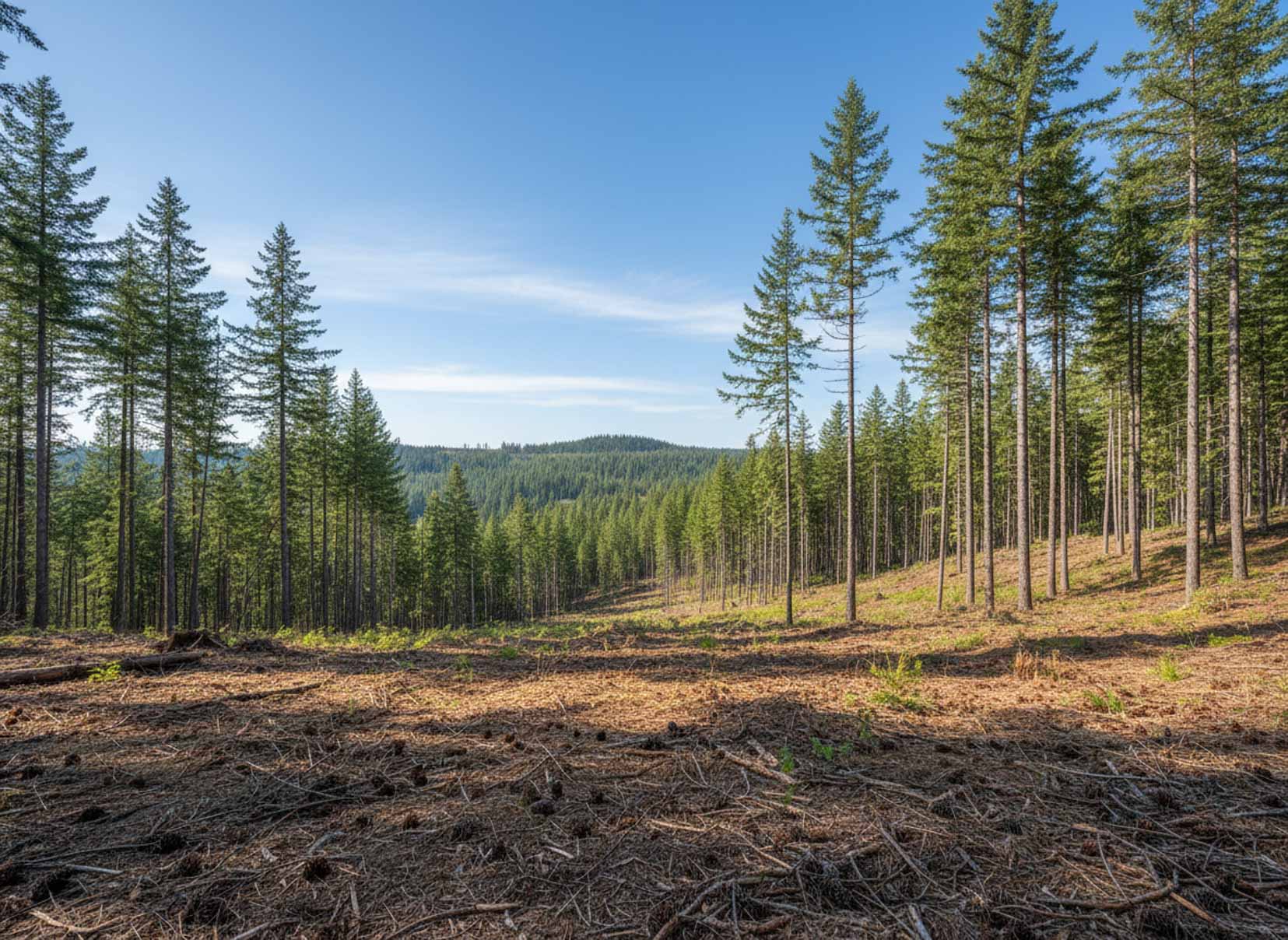
Acreage clearing can be planned selectively so that useful trees and natural buffers remain where practical. The treatment area should reflect the intended use of the land rather than clearing the entire parcel without a defined purpose.
Common acreage projects include:
- Opening selected portions of wooded property
- Reclaiming overgrown areas
- Improving visibility and access
- Clearing around existing structures
- Creating usable space for future improvements
- Managing vegetation along property boundaries
Forestry Mulching for Brush and Smaller Trees
Forestry mulching in Coeur d’Alene can process brush, understory vegetation and smaller trees directly on the property. This method may reduce the need for hauling, piling or burning vegetation and can leave a more manageable surface after treatment.
Forestry mulching may be appropriate for:
- Dense brush and understory growth
- Small-tree removal
- Trail and access clearing
- Fence-line maintenance
- Fuel-load reduction
- Selective acreage improvement
Suitability depends on vegetation size, slope, soil conditions and equipment access.
Logging and Larger-Tree Removal
Properties with mature timber, hazardous trees or substantial thinning requirements may need logging or larger-tree removal before the remaining vegetation can be cleared.
Logging and tree removal in Coeur d’Alene may be incorporated when larger trees must be removed from homesites, road alignments, utility corridors or heavily wooded acreage.
Logging and forestry mulching can also be combined. Larger trees are removed first, followed by mulching or additional clearing to manage brush, slash and smaller vegetation.
Private Road and Driveway Clearing
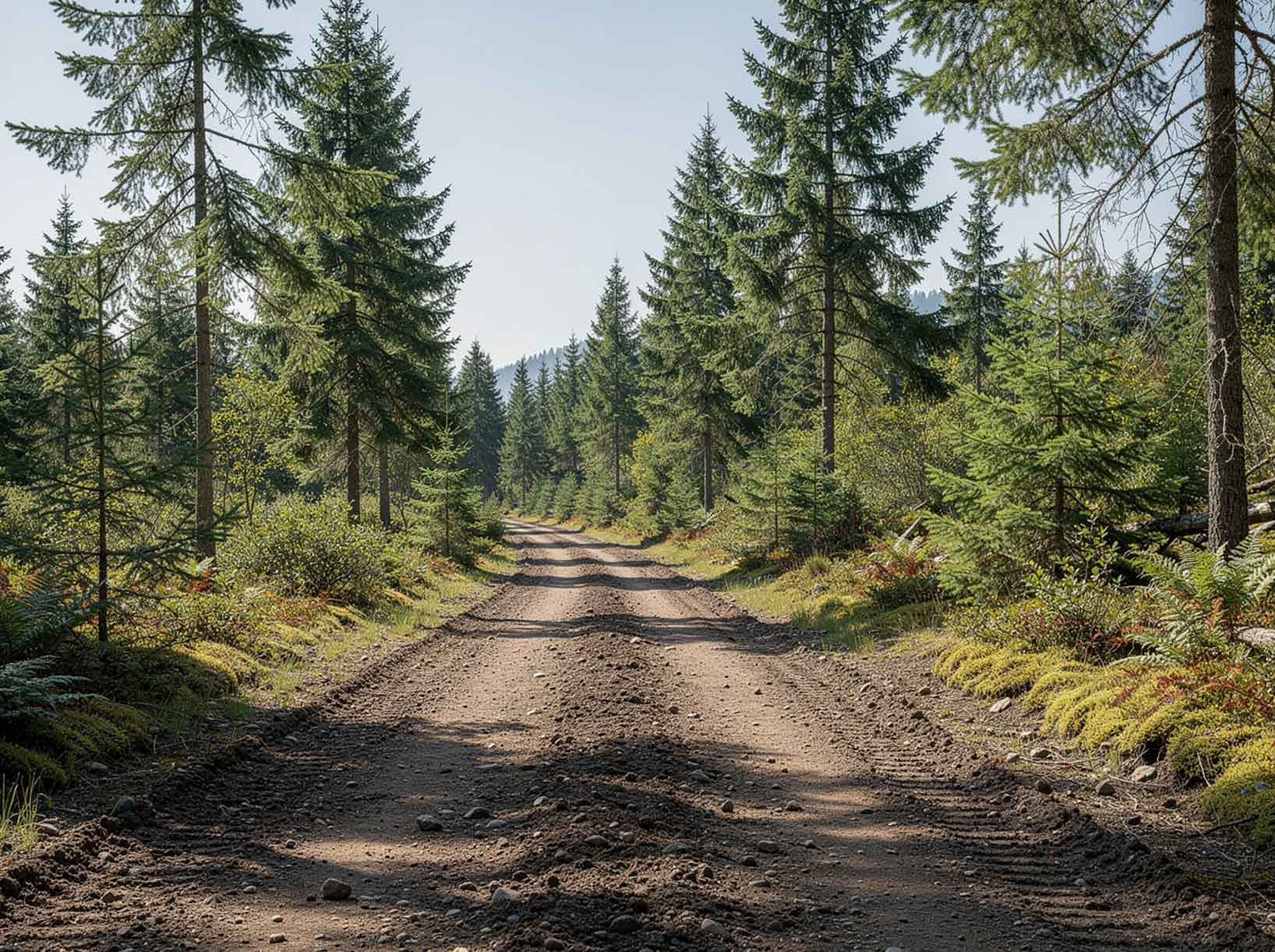
New access routes often require vegetation removal before excavation and road construction begin. Existing driveways may also need widening where trees, brush or leaning timber restrict visibility and usable road width.
Road and driveway clearing may include:
- Clearing the planned travel corridor
- Removing trees within the road alignment
- Widening narrow access routes
- Clearing around entrances and gates
- Creating room for drainage improvements
- Opening equipment and emergency access
The route should be planned around terrain, drainage, property boundaries and the future use of the road.
Utility, Septic and Property-Line Clearing
Utility installation, septic work, fencing and surveying may require narrow clearing corridors rather than broad site clearing. These areas should be opened only as wide as necessary for access and construction.
Corridor clearing may be completed for:
- Electrical and communication lines
- Water and sewer access
- Septic systems and drain fields
- Fence lines
- Property boundaries
- Survey and equipment access
Wildfire Fuel Reduction and Defensible Space
Land clearing is different from wildfire mitigation, but some properties require a combination of both services. Broader clearing may be appropriate for a homesite or road, while surrounding forested areas receive more selective vegetation treatment.
Wildfire mitigation in Coeur d’Alene may include defensible-space work, brush reduction, ladder-fuel removal and selective thinning around structures and access routes.
Wildfire mitigation cannot eliminate fire risk, but it can reduce concentrated vegetation and improve conditions around homes and other improvements.
Material and Debris Management
Land clearing creates logs, brush, stumps, slash and other woody material. The handling plan should be established before work begins so the expected final condition of the property is clear.
Material may be:
- Processed on site
- Mulched where suitable
- Stacked in a designated area
- Separated for firewood or future use
- Hauled when included in the project scope
- Managed as slash or woody debris
The best option depends on material size, property access, project goals and local requirements.
Land Clearing on Sloped or Uneven Terrain
Properties around Coeur d’Alene may include forested hillsides, rocky ground, drainage areas and narrow access routes. These conditions affect equipment selection, work sequencing and which areas can be treated safely.
A site evaluation is necessary before determining the appropriate clearing method. Some slopes or wet areas may require limited treatment or different timing to reduce unnecessary soil disturbance.
Serving Coeur d’Alene and Kootenai County
Land clearing services are available throughout Coeur d’Alene and surrounding communities, including Post Falls, Hayden, Rathdrum, Dalton Gardens, Fernan Lake Village and rural Kootenai County properties.
Larger projects elsewhere in North Idaho may also be considered based on acreage, terrain, vegetation, equipment access, travel requirements and overall project scope.
Every project begins with an evaluation of the property and intended land use so the clearing plan can be matched to the actual site conditions.
Request a Land Clearing Estimate in Coeur d’Alene
Tell us about your property, acreage, vegetation, access and intended land use. We evaluate land clearing projects throughout Coeur d’Alene and Kootenai County based on terrain, tree size, vegetation density, material handling and the overall scope of work.
Frequently Asked Questions About Land Clearing in Coeur d’Alene, ID
How much does land clearing cost in Coeur d’Alene?
Pricing depends on acreage, vegetation density, tree size, terrain, equipment access, material handling and the condition required after clearing. A site evaluation is needed to establish the scope and provide an accurate estimate.
Can land clearing include large-tree removal?
Yes. Larger trees may be removed when they are located within a homesite, road alignment, utility corridor or other planned clearing area. Properties with substantial mature timber may require logging before the remaining vegetation is cleared.
What is the difference between land clearing and forestry mulching?
Land clearing may involve removing trees, brush, stumps and vegetation to prepare an area for construction or another defined use. Forestry mulching processes brush and smaller trees into mulch and is often used for selective vegetation management rather than complete site clearing.
Can land clearing be completed on sloped terrain?
Some sloped properties can be cleared, but suitability depends on slope, soil stability, vegetation, equipment access and the intended use of the area. The property must be evaluated before selecting the appropriate method.
What happens to trees and brush after clearing?
Material may be mulched, processed on site, stacked, separated for firewood, managed as slash or hauled when included in the project scope. The handling plan should be established before work begins.
Does land clearing include excavation and grading?
Land clearing focuses on removing vegetation and woody material. Excavation, grading, drainage and foundation preparation are separate services that may follow once the site has been cleared.
Land Clearing and Related Property Services