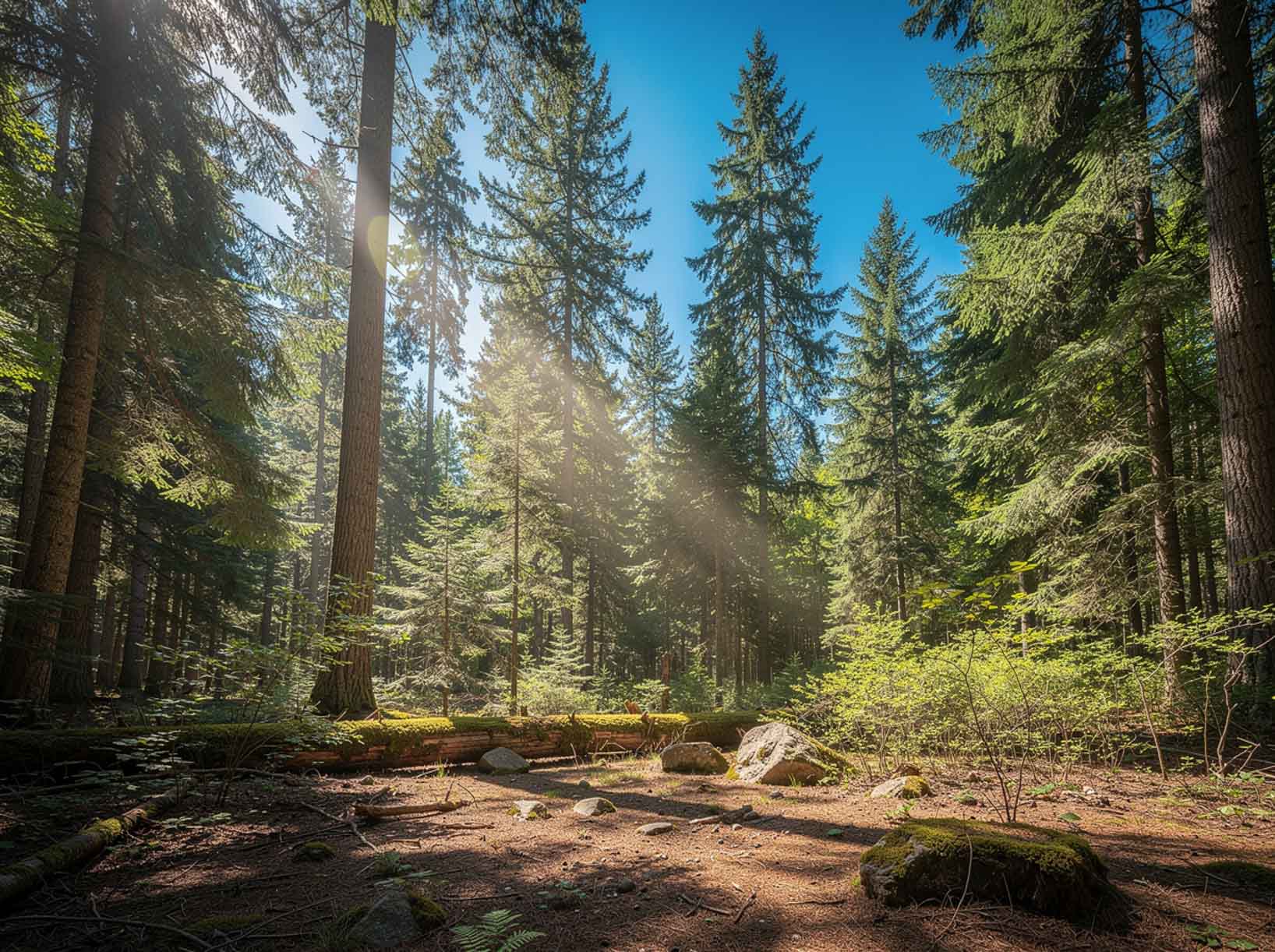
Professional Wildfire Mitigation in Spokane Valley, WA
Defensible Space and Fuel Reduction in Spokane Valley
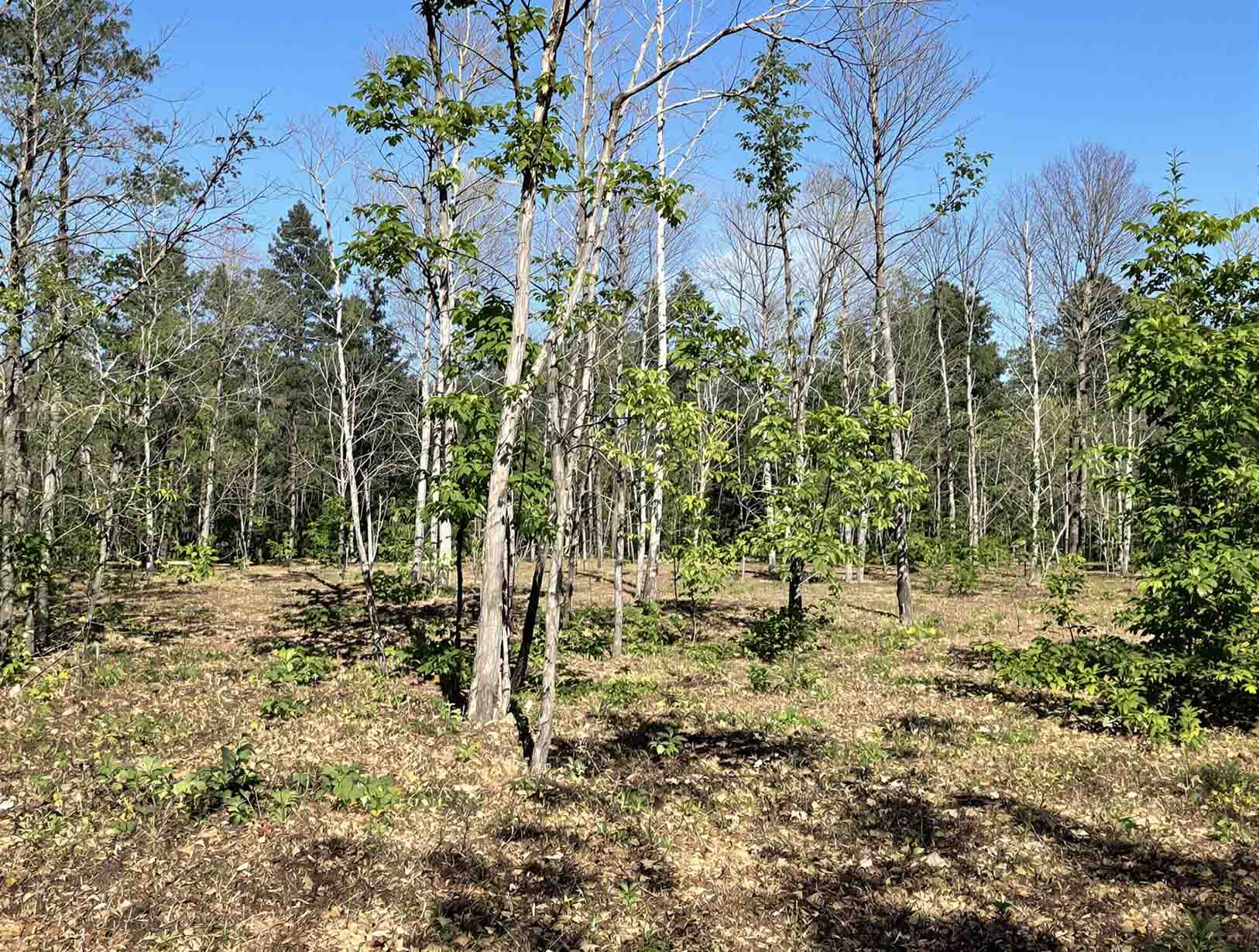
Professional wildfire mitigation services help Spokane Valley property owners reduce dense brush, ladder fuels and overcrowded tree growth around homes, outbuildings, private roads and wooded acreage. Properties near forested hillsides, rural residential areas and the eastern edge of Spokane County may contain continuous vegetation that increases wildfire exposure during hot, dry conditions.
Each project is planned around the terrain, vegetation density, equipment access and proximity to structures. The goal is to reduce combustible material, improve defensible space and support long-term vegetation management while retaining healthy trees and desirable vegetation where practical.
What Is Wildfire Mitigation?
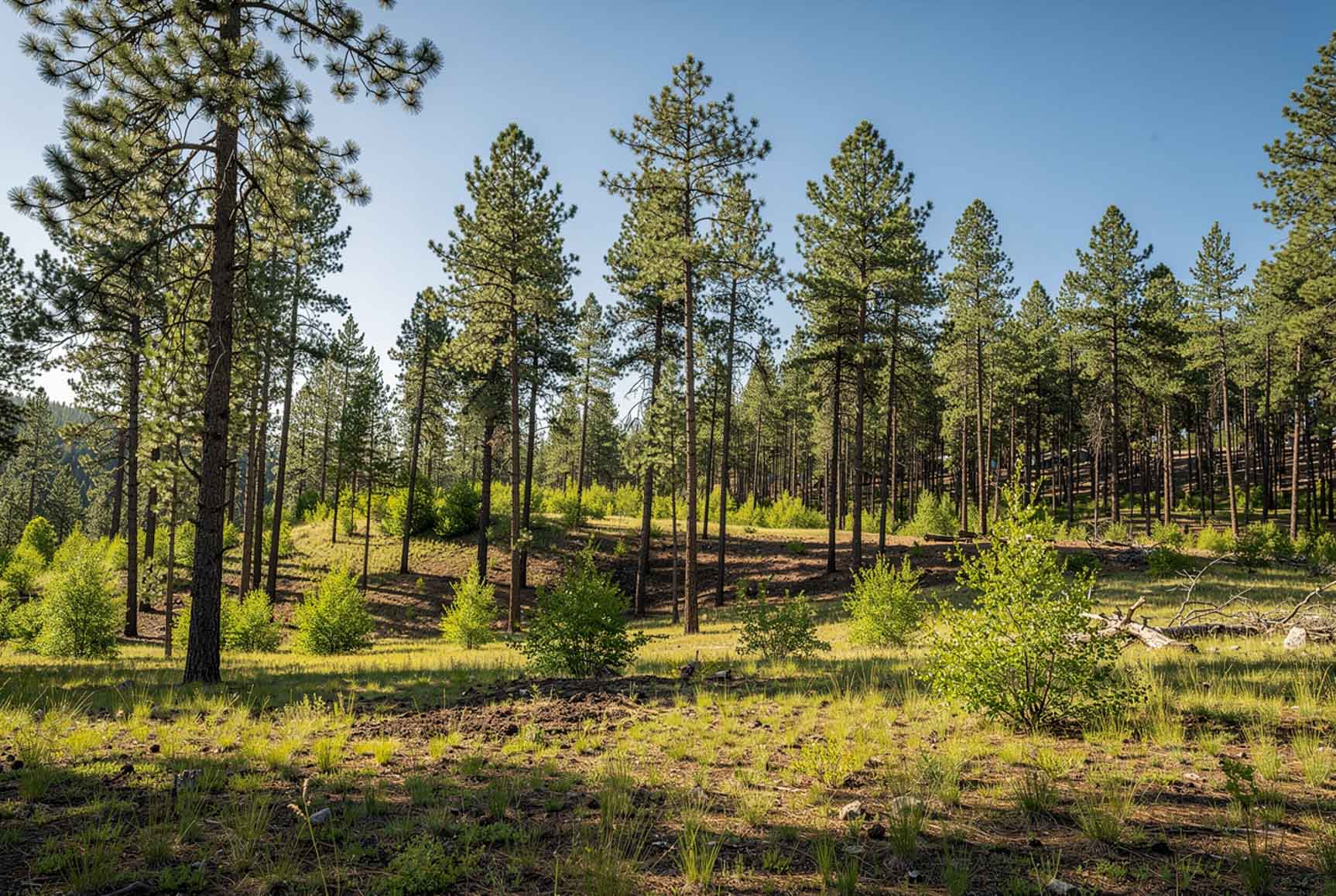
Wildfire mitigation is the selective treatment of vegetation and forest fuels that may contribute to the intensity or movement of wildfire across a property. Unlike complete land clearing, mitigation focuses on reducing specific hazards while preserving useful vegetation and healthy trees when site conditions allow.
Wildfire-mitigation work may include:
- Creating defensible space around homes and outbuildings
- Removing dense brush and understory vegetation
- Reducing ladder fuels beneath mature trees
- Thinning overcrowded timber
- Improving access along driveways and private roads
- Managing vegetation near fences, utilities and property boundaries
The appropriate treatment depends on slope, vegetation type, tree spacing, access and the location of structures or other improvements.
Defensible Space Around Homes and Structures
Defensible space is the managed area surrounding a home, shop, barn or other structure. The objective is to reduce combustible vegetation and create better separation between buildings, brush, trees and accumulated surface fuels.
Defensible-space work may include:
- Removing dense brush near structures
- Reducing lower vegetation that can act as ladder fuel
- Increasing spacing between selected trees
- Clearing vegetation along driveways and access routes
- Reducing accumulated woody material where practical
The scope should be based on the actual property rather than applying the same clearing distance or vegetation treatment to every site.
Fuel Reduction for Spokane Valley Properties
Properties throughout Spokane Valley and eastern Spokane County may contain seasonal grasses, pine needles, brush, small trees, dead vegetation and closely spaced timber. These materials can form continuous fuel paths between wooded areas, open ground and nearby structures.
Fuel-reduction work focuses on interrupting that continuity while retaining desirable vegetation where practical. Projects may involve targeted brush removal, selective thinning, access improvement and treatment around homes or other property improvements.
Forestry Mulching for Brush and Ladder Fuels
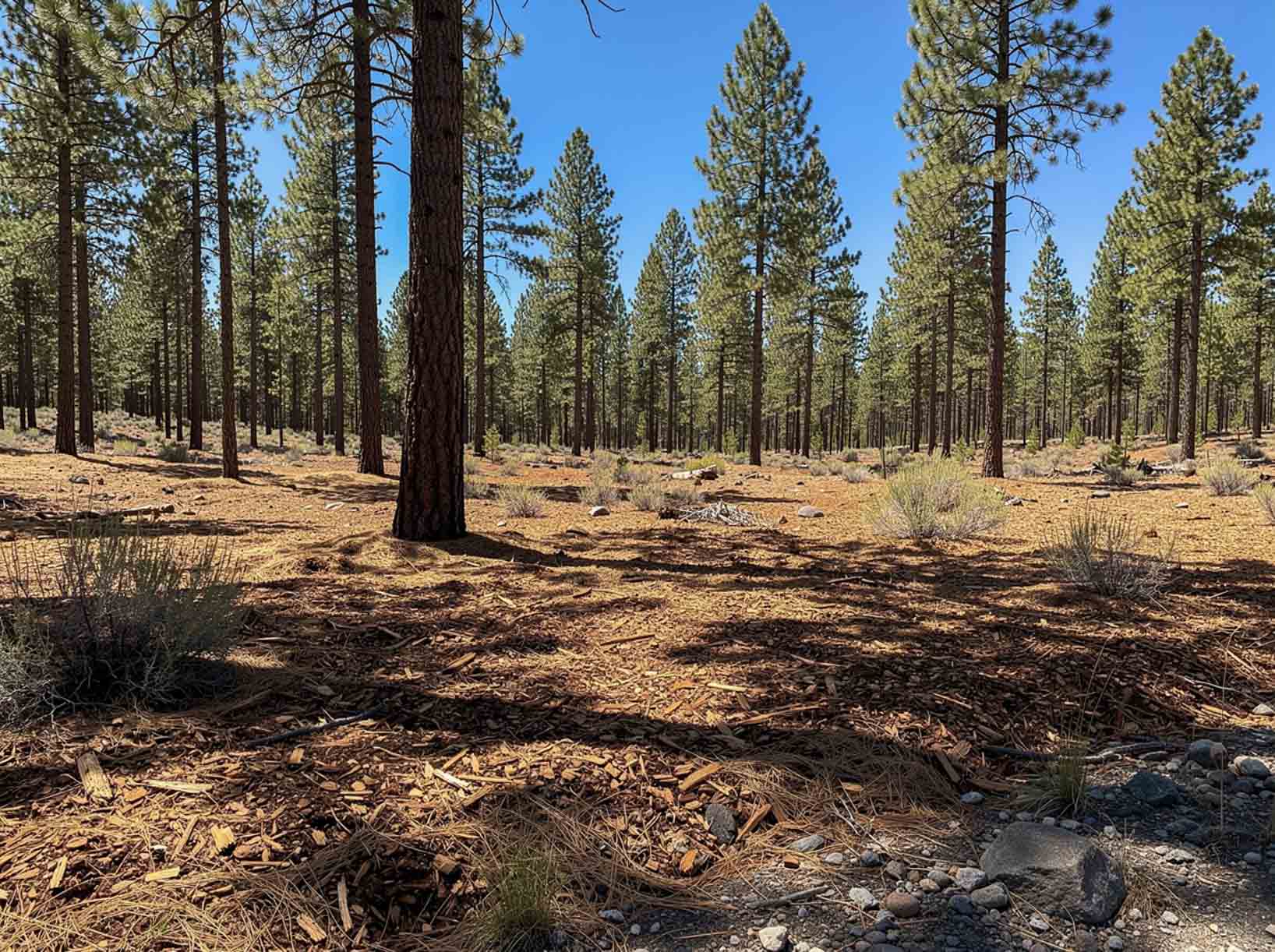
Forestry mulching can process brush, understory growth and smaller trees directly on the property. This method often reduces the need to pile, haul or burn vegetation and leaves processed organic material across the treated ground.
Forestry mulching may be used to:
- Reduce dense brush and understory growth
- Treat vegetation beneath larger trees
- Improve access around homes and acreage
- Open private roads and equipment routes
- Support broader defensible-space projects
For larger Spokane County projects, learn more about forestry mulching near Spokane. Suitability depends on vegetation size, slope, soil conditions and equipment access.
Selective Logging and Tree Thinning
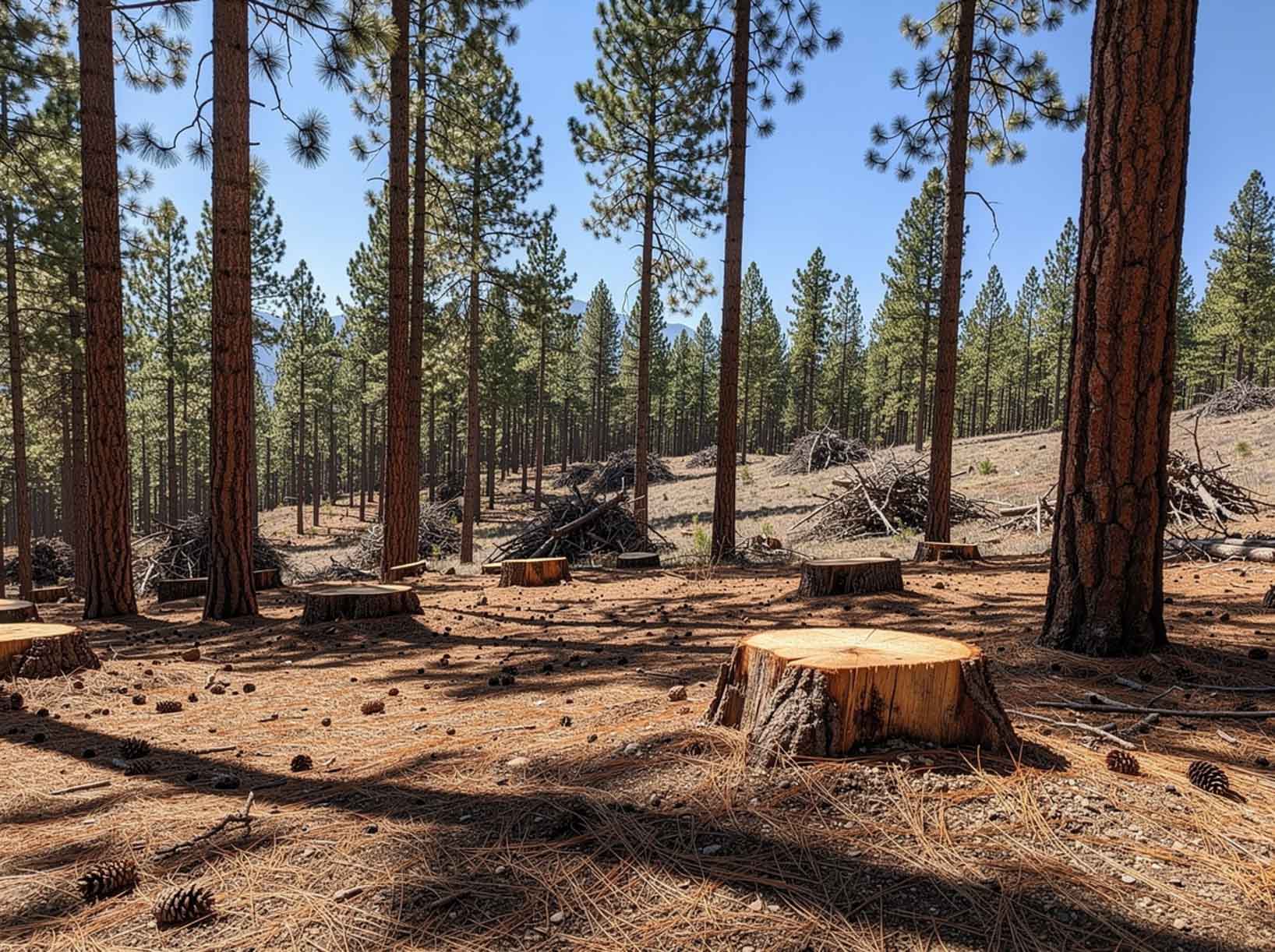
Properties with larger trees, overcrowded stands, hazardous timber or substantial tree-removal needs may require selective logging or tree removal rather than forestry mulching alone.
Logging and tree removal near Spokane may be incorporated when larger timber must be removed to improve spacing, reduce hazards, clear access or support broader forest-management goals.
Where both mature timber and dense understory vegetation are present, logging and forestry mulching may be combined into a coordinated project.
Wildfire Mitigation Along Roads and Access Routes
Driveways, private roads and equipment routes are important parts of rural property access. Dense vegetation, leaning trees and narrow corridors can limit visibility, equipment movement and emergency access.
Vegetation management along access routes may include brush removal, selective tree removal, roadside thinning and widening usable travel corridors where property conditions allow.
Wildland-Urban Interface Properties
Spokane Valley includes residential and rural properties where homes are located near forests, open land, grasslands, drainage corridors and unmanaged vegetation. These wildland-urban interface areas may require a combination of defensible-space planning, brush reduction, timber thinning and ongoing maintenance.
Properties near foothills, wooded acreage, rural subdivisions and the eastern Spokane County edge should be evaluated according to their specific terrain, vegetation and exposure.
Land Clearing and Site Preparation
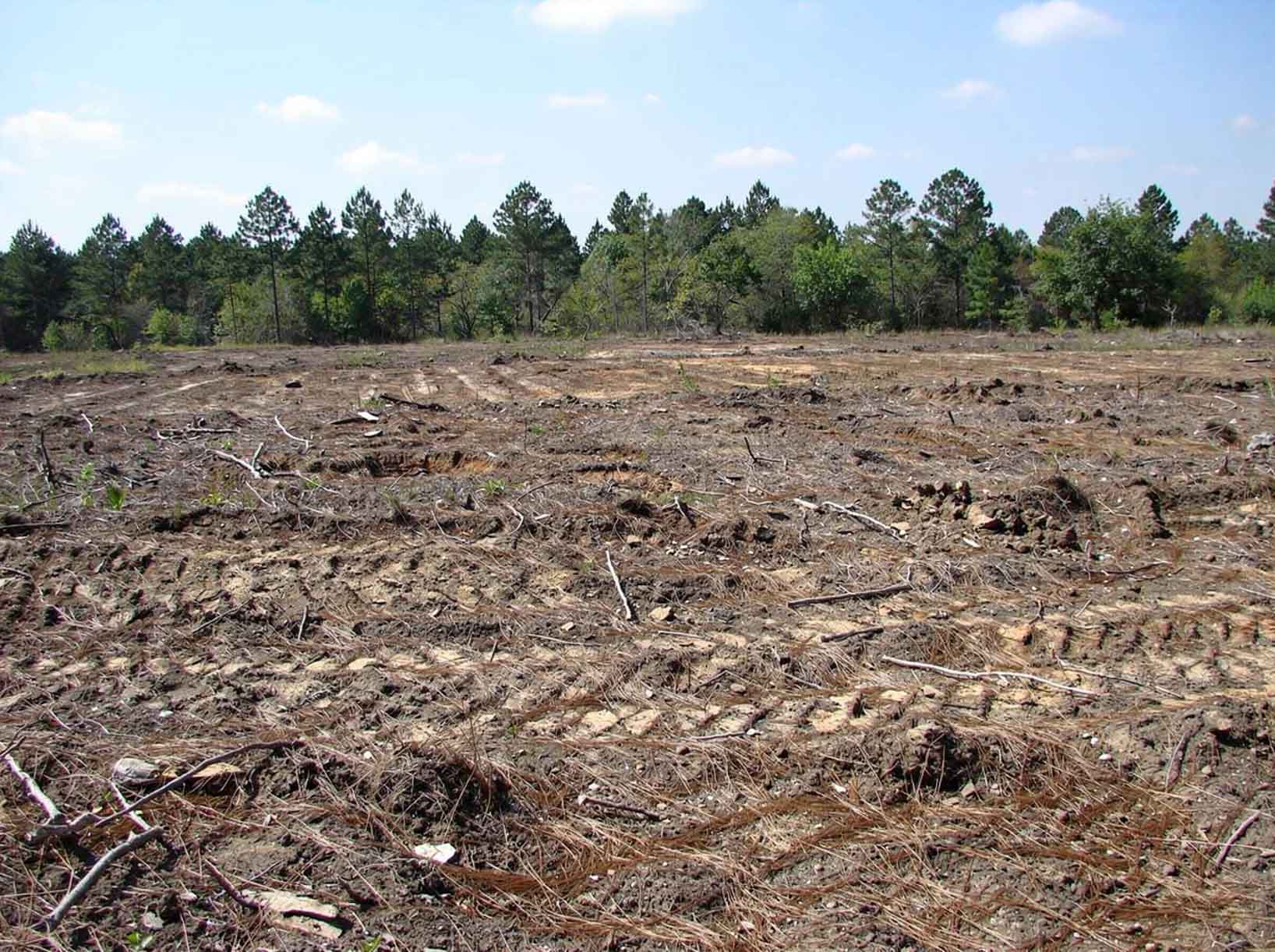
Wildfire mitigation is different from complete land clearing, but some projects may require broader vegetation removal for roads, structures, utilities or future development.
Where more extensive clearing is required, land clearing in Spokane Valley may be incorporated into the project plan. The scope should distinguish targeted wildfire-risk reduction from clearing intended for construction or development.
Washington Forest Health and Cost-Share Programs
Some Spokane Valley and Spokane County landowners may qualify for forest-health, fuel-reduction or wildfire-mitigation assistance programs. Project work can sometimes be planned around recommendations from a forester or program representative.
Landowners researching assistance may review the Washington DNR Cost-Share Program and other current forest-management opportunities. Program availability, eligibility, approval and reimbursement are not guaranteed.
Serving Spokane Valley and Eastern Spokane County
Wildfire mitigation services are available throughout Spokane Valley and nearby communities, including Greenacres, Veradale, Liberty Lake, Newman Lake, Otis Orchards, Millwood and surrounding rural areas.
Every project begins with an evaluation of the property, vegetation conditions, terrain and access so the treatment plan can be matched to the land and the owner’s long-term goals.
Frequently Asked Questions About Wildfire Mitigation in Spokane Valley, WA
What is the difference between wildfire mitigation and land clearing?
Wildfire mitigation focuses on reducing combustible vegetation, improving tree spacing and creating defensible space while preserving desirable trees where practical. Land clearing is broader and is generally completed to prepare property for roads, utilities, structures or future development.
How much does wildfire mitigation cost in Spokane Valley?
Costs depend on acreage, vegetation density, tree size, terrain, equipment access and the treatment goals for the property. A site evaluation is needed to determine the appropriate scope and provide an accurate estimate.
Does forest thinning help reduce wildfire risk?
Selective thinning can reduce fuel continuity, improve spacing between trees and remove overcrowded or declining timber. The appropriate amount of thinning depends on tree species, stand density, terrain and the property’s long-term forest-management goals.
Is defensible space required around homes?
Requirements can vary by property, jurisdiction, insurance provider and applicable regulations. Regardless of whether it is formally required, defensible space is commonly recommended for homes and structures near timber, brush, grasslands or unmanaged vegetation.
Can wildfire mitigation be performed on sloped terrain?
Many projects can be completed on sloped terrain, but suitability depends on slope, soil conditions, vegetation and equipment access. The site must be evaluated before selecting the safest and most appropriate treatment method.
Can forestry mulching be used for wildfire mitigation?
Forestry mulching can be effective for reducing brush, understory vegetation, ladder fuels and smaller trees. Larger timber or hazardous trees may require selective logging or tree removal as part of a broader wildfire-mitigation plan.
Request a Wildfire Mitigation Estimate in Spokane Valley
Tell us about your property, acreage, vegetation conditions and wildfire-mitigation goals. We evaluate projects throughout Spokane Valley and eastern Spokane County based on terrain, access, proximity to structures, fuel density and the overall scope of work.
Wildfire Mitigation and Related Land Management Services