Professional Forestry Mulching in Sandpoint, ID
Brush Reduction and Vegetation Management Across Bonner County
Professional forestry mulching services help Sandpoint and Bonner County property owners manage dense brush, small trees, understory vegetation and overgrown access routes. North Idaho properties often include heavily timbered acreage, seasonal undergrowth, sloped terrain and rural roads that require careful vegetation management.
Forestry mulching processes eligible vegetation directly on the property, reducing the need for hauling or burning in many applications. Each site is evaluated according to vegetation size, terrain, soil conditions, access and the intended use of the land.
What Is Forestry Mulching?
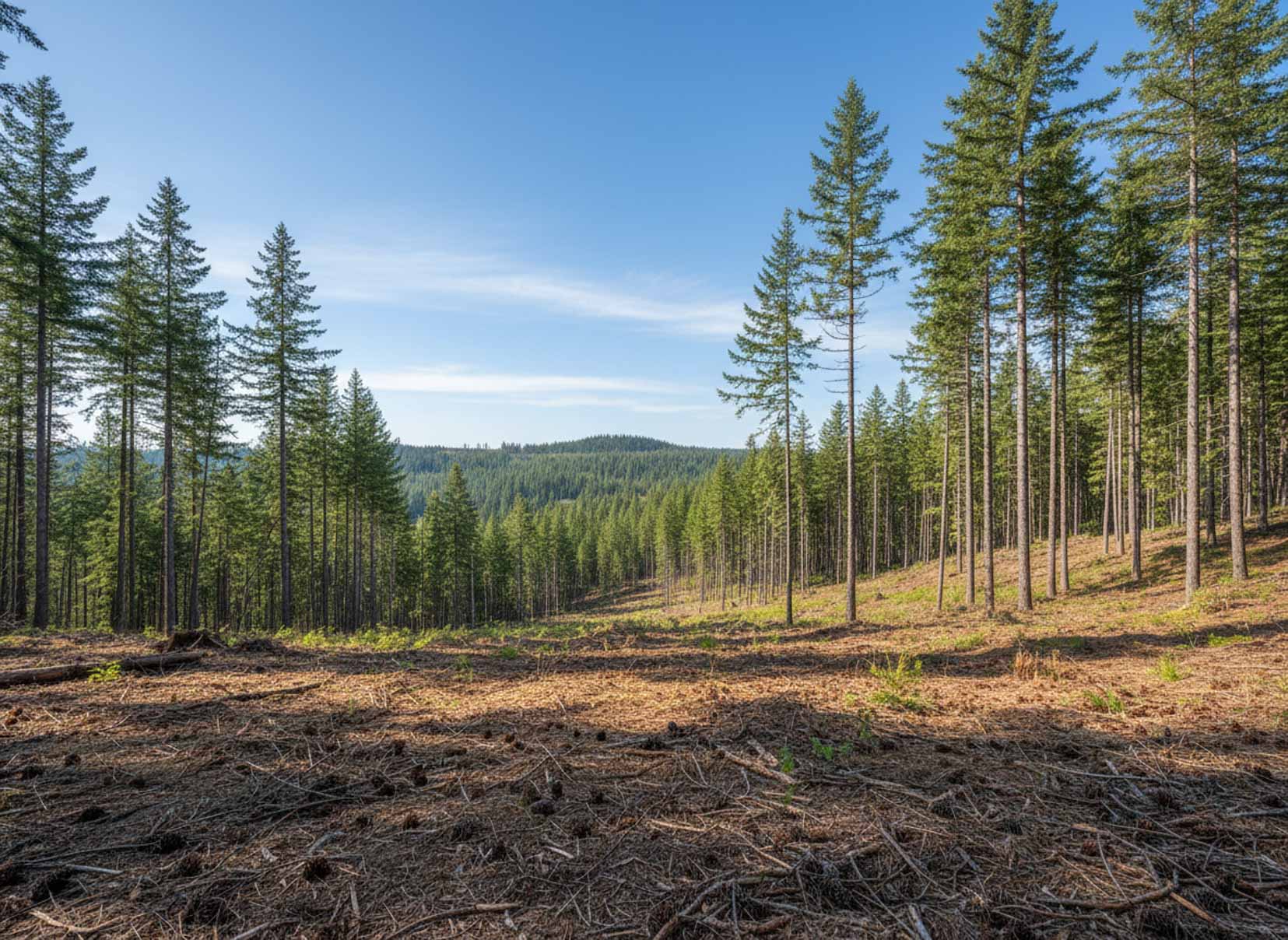
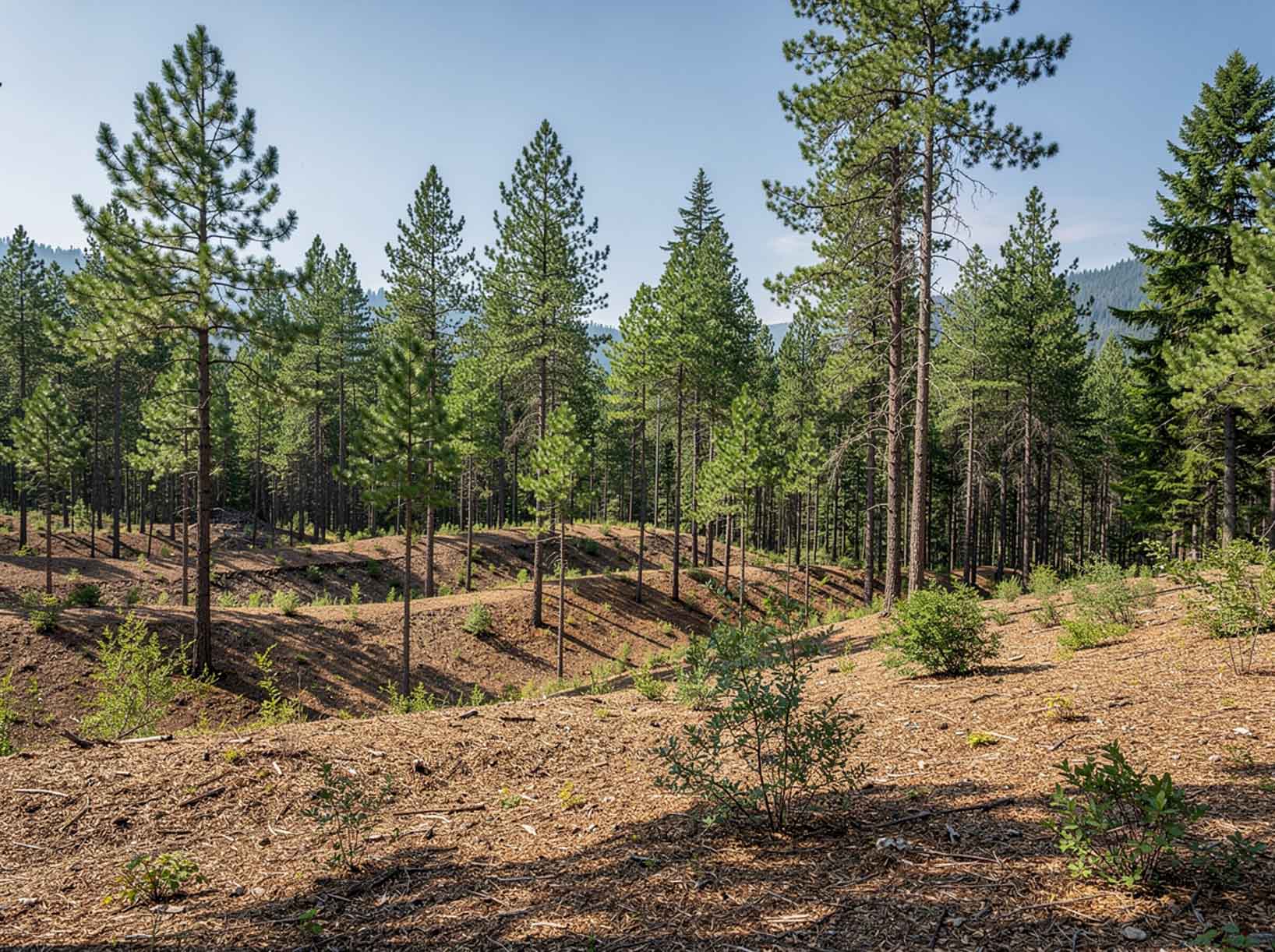
Forestry mulching uses specialized equipment to cut, grind and process brush, understory vegetation and smaller trees into mulch. Material is treated directly on the property, which can reduce hauling, piling and burning requirements depending on site conditions and project goals.
Forestry mulching may be used for:
- Dense brush and understory reduction
- Small-tree removal
- Fuel reduction and defensible-space support
- Trail and access clearing
- Fence-line and boundary maintenance
- Roadside vegetation management
- Selective acreage improvement
- Preparing areas for future land use
The appropriate treatment depends on vegetation diameter, material density, slope, soil moisture and equipment access.
Brush and Understory Reduction
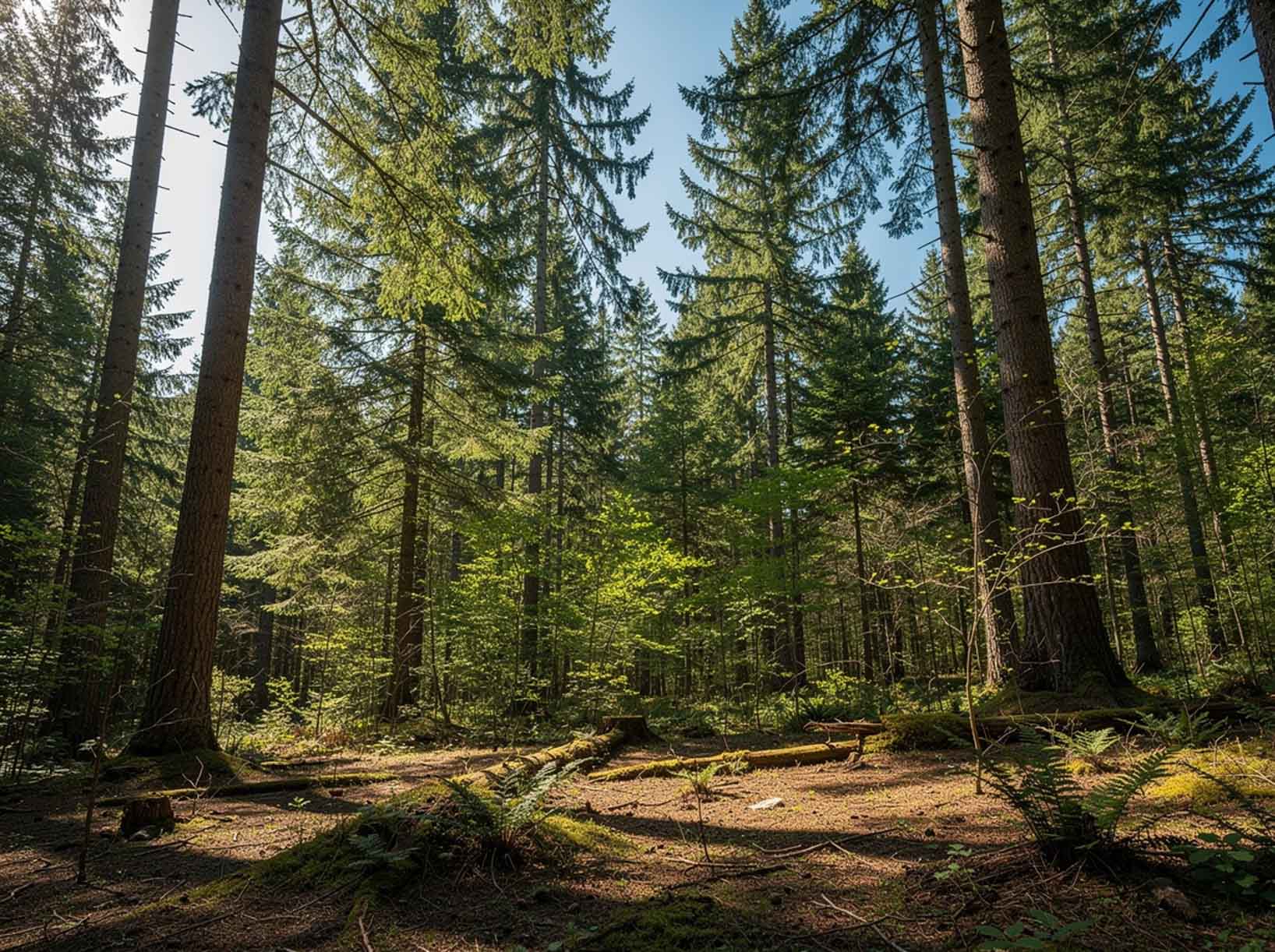
Dense brush and understory growth can restrict access, reduce visibility and make rural acreage difficult to maintain. Forestry mulching can reduce this vegetation while leaving larger desirable trees in place where practical.
Brush-reduction work may include:
- Removing thick shrubs and saplings
- Opening overgrown portions of wooded acreage
- Improving visibility around structures
- Creating access through dense vegetation
- Reducing vegetation along roads and driveways
- Reclaiming areas that have become difficult to use
The treatment area should be based on the property owner’s goals rather than clearing vegetation without a defined purpose.
Fuel Reduction and Wildfire Mitigation
Bonner County contains extensive forested acreage with dense brush, ladder fuels and accumulated woody material. Forestry mulching can reduce lower vegetation and interrupt some of the fuel continuity between the forest floor and larger tree canopies.
Mulching may be combined with wildfire mitigation in Sandpoint when the project also involves defensible space, selective thinning, roadside vegetation management or treatment around homes and outbuildings.
Forestry mulching cannot eliminate wildfire risk. Larger trees, heavy slash and other site conditions may require additional treatment.
Improving Access Across Rural Acreage
Overgrown trails, roads and equipment routes can become restricted by brush, saplings, low limbs and encroaching vegetation. Forestry mulching can reopen selected corridors and improve access for property maintenance, forestry work and future land improvements.
Access work may involve:
- Reopening existing trails
- Clearing equipment routes
- Widening vegetation along private roads
- Clearing around gates and entrances
- Opening access to remote portions of a property
- Improving visibility along driveways
Forestry mulching removes vegetation but does not replace excavation, grading or road construction where a finished driving surface is required.
Forestry Mulching Around Homes and Outbuildings
Vegetation around homes, shops, barns and other improvements can interfere with maintenance, visibility and defensible-space goals. Targeted mulching can reduce brush and smaller vegetation while retaining selected trees and natural screening where practical.
Work near structures should account for utilities, septic systems, fencing, landscaping features, propane tanks and available equipment clearance.
Lake-Area and Rural Bonner County Properties
Properties around Sandpoint, Lake Pend Oreille and surrounding rural communities may include steep slopes, narrow access, dense timber and seasonal moisture. These conditions affect the timing and suitability of mechanical vegetation treatment.
Some areas may require limited treatment because of slope, soft ground, drainage, utilities or restricted access. A site evaluation is needed before determining which portions of a property can be treated safely.
Forestry Mulching on Sloped Terrain
Forestry mulching can be used on some sloped and uneven properties, but not every hillside is suitable for the same equipment or treatment method. Soil stability, slope angle, vegetation size, ground moisture and access all affect the work plan.
Where mechanical treatment is not appropriate, a project may require hand work or a combination of methods.
Managing Small Trees and Dense Regrowth
Forestry mulching is commonly used for smaller trees, saplings and dense regrowth. The size of material that can be treated depends on tree species, trunk diameter, density, condition and site access.
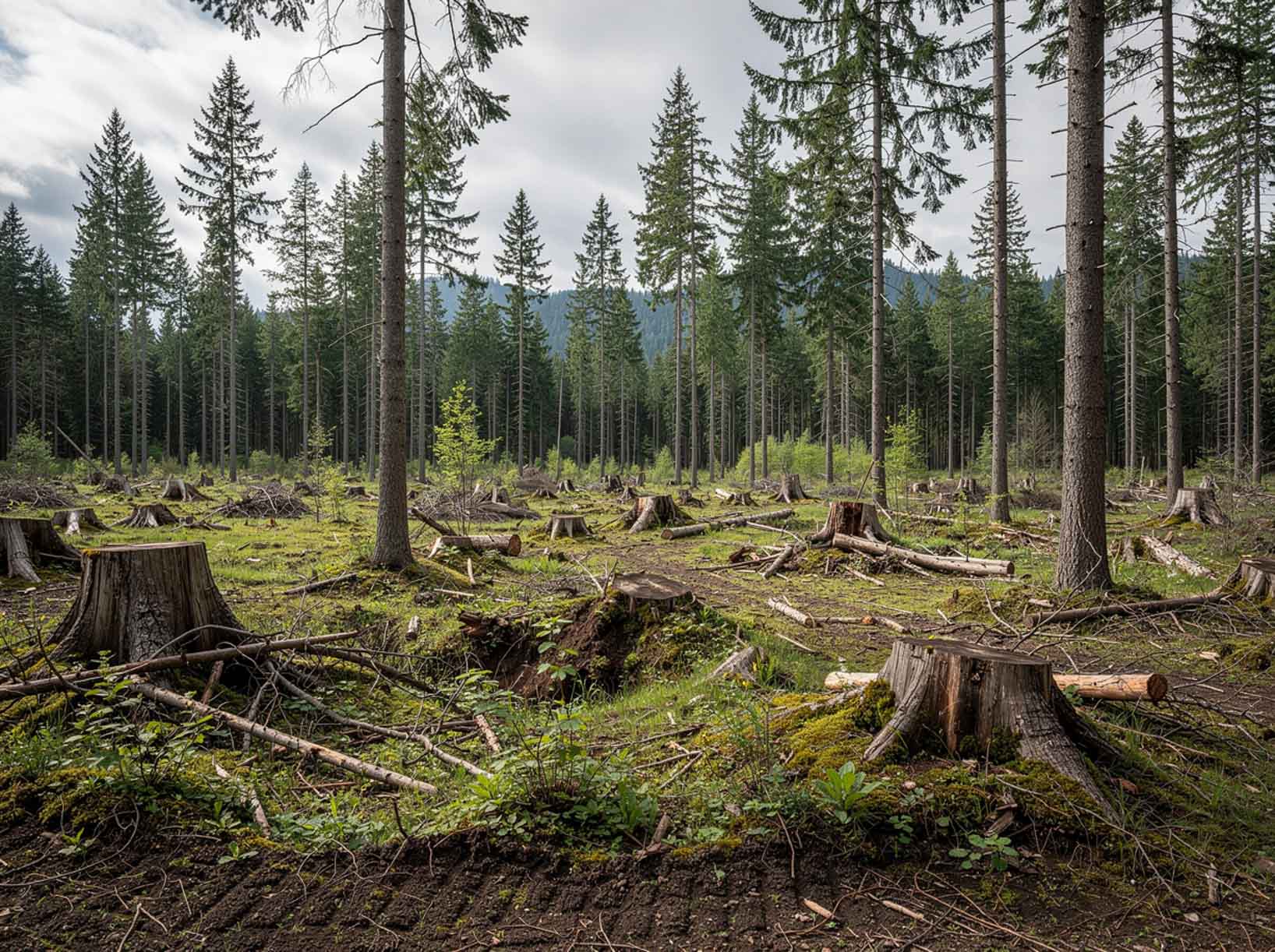
Properties with mature timber or larger-tree removal needs may require logging and tree removal in Sandpoint before the remaining brush and understory vegetation are mulched.
Forestry Mulching Versus Land Clearing
Forestry mulching selectively processes brush and smaller vegetation while leaving roots and much of the soil profile in place. Land clearing is more appropriate when vegetation, trees, stumps and other material must be removed for construction, roads, utilities or other development.
Some properties require both services. Forestry mulching may be used around the perimeter or across selected acreage, while broader clearing is completed where a homesite, road or other improvement is planned.
Mulched Material and the Finished Surface
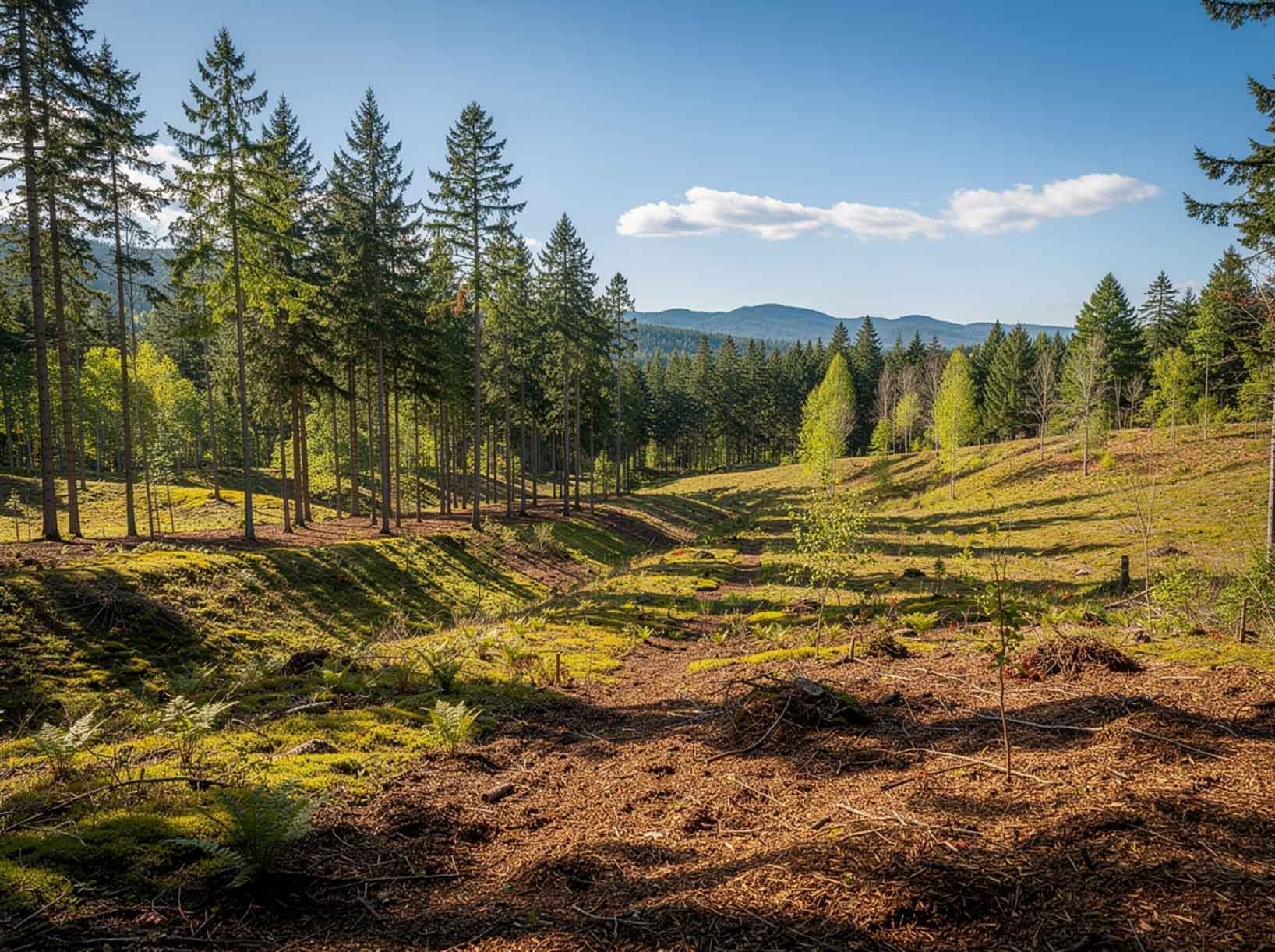
Forestry mulching leaves processed woody material distributed across the treated area. The appearance and depth of the mulch layer depend on vegetation density, material size, soil conditions and the number of passes required.
The mulch layer may help cover exposed soil and reduce immediate erosion, but it does not create a finished lawn, graded building pad or compacted road surface. Additional site preparation may be needed depending on the property owner’s goals.
Idaho Forest Health and Cost-Share Programs
Some Bonner County landowners may qualify for forest-health, fuel-reduction or wildfire-mitigation assistance programs. Eligibility, project requirements and reimbursement vary, and work should not begin under the assumption that funding is guaranteed.
Property owners researching assistance can review the Idaho IDL Cost-Share Program and speak with the appropriate agency or forestry representative before committing to a project.
Serving Sandpoint and Bonner County
Forestry mulching services are available throughout Sandpoint and surrounding areas, including Ponderay, Kootenai, Dover, Sagle, Priest River, Selle Valley and rural Bonner County properties.
Larger projects elsewhere in North Idaho may also be considered based on acreage, vegetation density, terrain, access, travel requirements and overall scope.
Every project begins with an evaluation of the property so the treatment plan can be matched to the vegetation, terrain and intended land use.
Request a Forestry Mulching Estimate in Sandpoint
Tell us about your property, acreage, vegetation conditions, terrain and land-management goals. We evaluate forestry mulching projects throughout Sandpoint and Bonner County based on access, material size, vegetation density, slope and overall project scope.
Frequently Asked Questions About Forestry Mulching in Sandpoint, ID
How much does forestry mulching cost in Sandpoint?
Pricing depends on acreage, vegetation density, material size, slope, soil conditions, equipment access and the desired condition of the property after treatment. A site evaluation is needed to determine the scope and provide an accurate estimate.
What size trees can forestry mulching handle?
Forestry mulching is generally best suited for brush, saplings and smaller trees. The size that can be treated depends on tree species, trunk diameter, density, condition and terrain. Larger timber may require logging or separate tree removal.
Can forestry mulching help reduce wildfire risk?
Forestry mulching can reduce brush, ladder fuels and dense understory vegetation. It cannot eliminate wildfire risk, and larger trees, heavy slash or other conditions may require additional wildfire-mitigation work.
Can forestry mulching be completed on steep terrain?
Some sloped properties can be treated, but suitability depends on slope angle, soil stability, ground moisture, vegetation size and equipment access. The property must be evaluated before the appropriate method can be selected.
What happens to the vegetation after mulching?
Brush and smaller woody vegetation are processed into mulch and distributed across the treated area. The finished depth and appearance depend on the amount and size of material present.
What is the difference between forestry mulching and land clearing?
Forestry mulching processes brush and smaller trees while leaving roots and much of the soil profile in place. Land clearing is more appropriate when vegetation, larger trees, stumps and other material must be removed for construction or development.
Forestry Mulching and Related Land Management Services